
Redeemed Contracting · Bathroom Remodeling
How Do You Know It's Time to Remodel Your Bathroom? 7 Signs It's Time to Upgrade
The signs are there — most people just aren't sure which ones actually matter.
Most people don't call us because they want a prettier bathroom.
They call because the bathroom has quietly stopped working for their family. The shower drains slow. The vanity is too small for two people getting ready in the morning. The floor feels a little soft near the tub, and nobody wants to think too hard about why.
A prettier bathroom is usually the result of a remodel. It's rarely the reason for one.
Here's the part we wish more homeowners understood: a lot of folks wait too long. They put it off until a leak, a mold problem, or a failing shower forces an emergency. At that point, the project isn't a choice anymore — it's a scramble. Remodeling before you hit that wall almost always gives you more options and less stress. You get to plan. You get to budget. You get to pick the materials you actually want.
So how do you know when you've reached that point? After years of remodeling bathrooms for homeowners across Northeast Ohio, we've noticed the same signs come up again and again. Here are seven of them.
The 7 Signs at a Glance
- You have water damage — soft floors, swollen trim, dark grout, or stains below the bathroom
- The layout fights you every day — too cramped, one sink, no storage
- You're patching the same problems over and over
- The bathroom looks like it hasn't changed since the house was built
- You plan to stay in the home for years and want it to fit your life
- You're embarrassed to let guests use it
- You're already planning another remodeling project nearby
Table of Contents
- 1. Your Bathroom Has Water Damage
- 2. The Layout Doesn't Work Anymore
- 3. You're Constantly Repairing Things
- 4. It Feels Stuck in Another Decade
- 5. You're Planning to Stay for Years
- 6. You're Embarrassed When Guests Use It
- 7. You're About to Remodel Something Else
- 8. Should You Wait Until Something Breaks?
- 9. Frequently Asked Questions
Your Bathroom Has Water Damage
This is the one people most often ignore. Bathrooms are wet rooms. Water is supposed to stay inside the tub, the shower, and the sink. When it starts going where it shouldn't, the damage builds slowly and quietly behind the surfaces you can see.
Watch for these warning signs:
A floor that feels soft or spongy when you step near the tub or toilet
Trim along the base of the wall that's swollen or peeling
A stain on the ceiling of the room directly below the bathroom
Grout lines in the shower that stay dark no matter how much you scrub
You can't fix water damage with cosmetics
If you suspect water damage, that's not a "someday" project. That's the strongest sign on this whole list that it's time to act. Our article on hidden problems found during a bathroom remodel covers what we find most often once the walls are open.
The Layout Doesn't Work Anymore
Sometimes the bathroom isn't falling apart. It just fights you every single day.
The shower is too tight to turn around in. There's only one sink, so mornings turn into a traffic jam. There's nowhere to put towels. The door swings open and bumps the vanity. The toilet sits in a spot that makes the whole room feel cramped.
None of those are emergencies. But they wear on you. A bathroom you use several times a day should make your life easier, not harder.
A remodel isn't just new finishes — it's about how the room functions for the people who actually live there.
The good news is that function is fixable. Sometimes moving a single wall opens up the whole space. Sometimes relocating the plumbing lets us swap a cramped corner shower for a roomy walk-in. If your bathroom looks okay but frustrates you every morning, the layout might be the real problem — and that's a great reason to remodel.
Not sure where your bathroom stands?
We'll take an honest look and tell you whether a full remodel makes sense or a simpler update would do the job.
You're Constantly Repairing Things
Pay attention to how often you're patching the same room. A loose tile here. Cracked grout there. A faucet that drips no matter how many times you tighten it. An exhaust fan that rattles or quit working years ago. Caulk that turns black a few weeks after you redo it. Plumbing fixtures so old you can't find matching parts.
One repair is normal — that's just owning a home. But when the repairs start stacking up, you've crossed into different territory.
There's a tipping point where fixing costs more than replacing
A lot of the issues people keep repairing are connected anyway. Old plumbing, failing caulk, and loose tile often point back to the same aging materials underneath.
It Feels Stuck in Another Decade
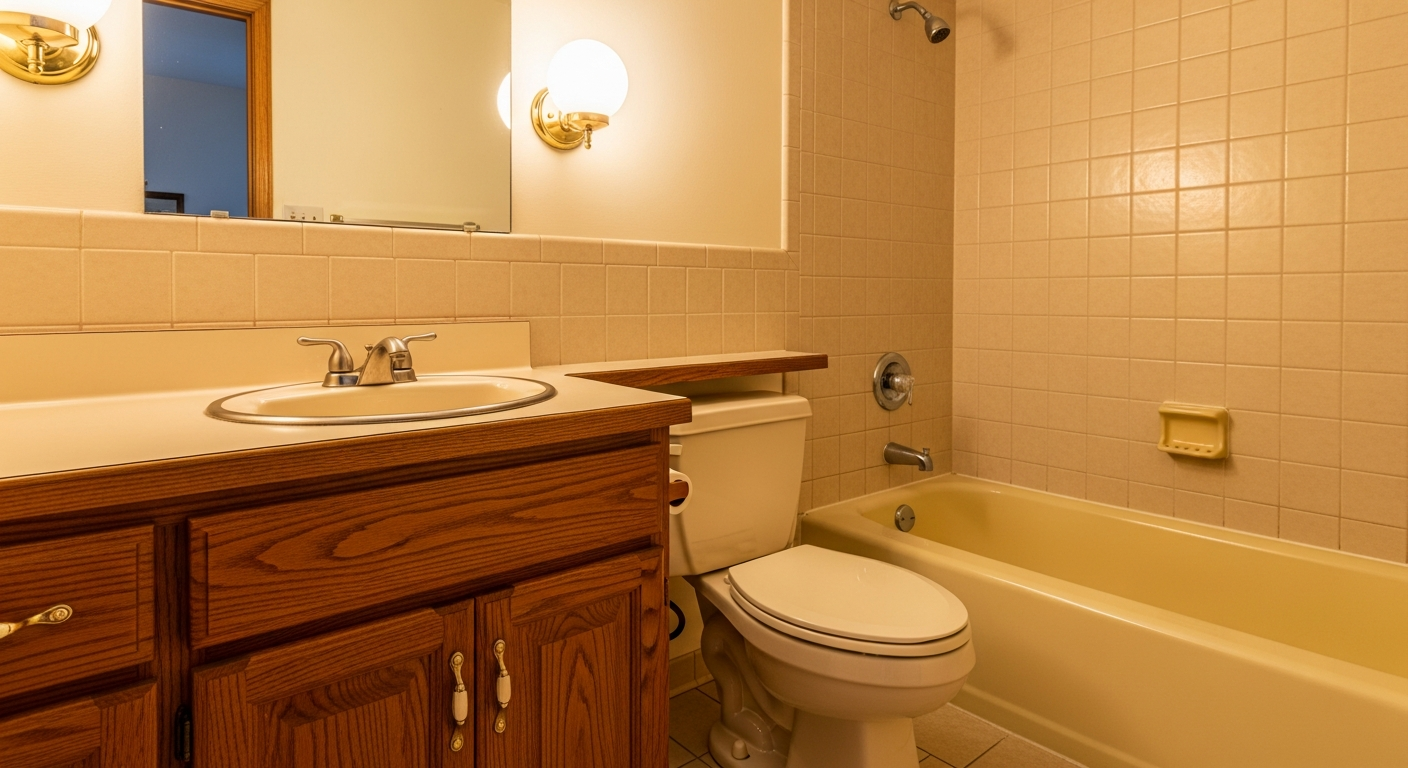
You know this bathroom the second you walk in. Cultured marble countertops. Heavy oak cabinets. Pink, blue, or almond fixtures. A one-piece fiberglass tub-and-shower surround that's turned a dull yellow. A single dim light over the mirror that leaves half the room in shadow.
Here's an honest point. Outdated doesn't mean broken. A dated bathroom can still technically work — the toilet flushes, the water runs, nothing is leaking. But "it still works" isn't the only thing that matters. You use this room every day. If it makes you cringe a little each time, that's worth something.
There's also the value side. A badly dated bathroom can drag down how buyers see the rest of your house, even when everything else is in great shape. If your bathroom feels frozen in another era, an update can bring it back to the present and make the whole house feel newer.
You're Planning to Stay in the Home for Years
This sign flips the usual question on its head. A lot of remodeling advice is built around resale — what will buyers want, what adds value when you sell. Those are fair questions if you're moving soon. But if you plan to stay put for years, the better question is simpler: what do you want?
When you're remodeling for yourself instead of a future buyer, the priorities change. Now it's about your daily comfort and your routine. That might mean planning ahead for aging in place — a walk-in shower with no curb to step over, grab bars built into the design, a comfortable-height toilet. Or it might mean the things that just make life nicer: heated floors for cold Ohio mornings, real storage so the counter isn't always cluttered, low-maintenance materials that don't need constant scrubbing.
When this is your forever home
If you'd like a sense of what different levels of remodel involve, our Bathroom Investment Guide walks through it in plain terms.
Not sure where your bathroom stands?
We'll take an honest look and tell you whether a full remodel makes sense or a simpler update would do the job.
You're Embarrassed When Guests Use It
This one's a little harder to admit, so we'll just say it plainly.
Some people stop inviting friends and family over because of one room. They love their home, but the bathroom guests would use makes them tense up. So they host less, or they apologize on the way down the hall.
That's no way to feel about your own house.
We'll be honest about the flip side too. Appearance isn't everything, and a bathroom doesn't need to be a magazine spread. You don't have to remodel just to impress anyone. But your home should feel like a place you're proud of. If there's one room you actively hide from visitors, that's a real quality-of-life issue — not a vanity thing. You deserve to feel good about every part of your house, including the room at the end of the hall.
You're About to Remodel Something Else
Timing matters more than most people realize. If you're already planning another project, your bathroom decision is connected to it. Maybe you're putting in new flooring that runs through the hall. Maybe you're redoing the primary bedroom. Maybe there's a home addition or a bigger whole-home renovation on the horizon.
In all of those cases, it's often smarter to handle the bathroom first, or at least at the same time.
Everything ties together. New flooring that stops at the bathroom door looks unfinished. A beautiful bedroom remodel loses some of its shine when the attached bathroom is dated.
Doing it later costs more. Handling the bathroom separately often means tearing into work you just paid for.
Simple efficiency. When crews are already on site and the house is already in project mode, folding in the bathroom usually causes less disruption than coming back for a separate job months later.
If a bigger project is coming, don't treat the bathroom as a separate decision. Look at the whole picture and figure out the smartest order to do things. Sometimes the bathroom should lead.
The Honest Trade-Off
Should You Wait Until Something Breaks?
A lot of homeowners ask us some version of this: "Can't I just wait until something actually fails?" You can. Plenty of people do. But here are the trade-offs, because waiting usually costs you in ways that aren't obvious up front.
You lose control of the timeline
A burst pipe or a serious leak doesn't care whether this is a good month for a project. You're suddenly making fast decisions under pressure instead of thoughtful ones.
You lose design options
In an emergency, the goal becomes stopping the damage as quickly as possible. There's no time to research materials, compare layouts, or get the look you really wanted.
The cost can climb
When water damage or a failing system goes unaddressed, the problem tends to spread. A leak that could have been a contained fix becomes a bigger repair once it reaches the subfloor or the room below.
Now, we're not here to scare you into anything. Plenty of bathrooms have years of good life left, and there's no reason to rush a remodel you don't need. Honest is honest in both directions. The point is just this: planning ahead lets you budget on your terms, design carefully, and actually enjoy the process. Waiting for a break usually means rushing through it.
If you're curious what tends to hide behind the surfaces when we open things up, our guide on hidden problems found during a bathroom remodel covers what we run into most. And if you'd like to understand what the remodeling process looks like once you do move forward, the what to expect during a bathroom remodel guide and our week-by-week bathroom remodel timeline are good places to start.
Final Thoughts
Where Does Your Bathroom Stand?
Every bathroom eventually reaches a point where investing in it makes more sense than continuing to patch problems. The trick is figuring out where your bathroom sits on that line — and the honest answer is that it depends.
Not every bathroom needs a complete remodel. Sometimes a cosmetic update is plenty. New fixtures, fresh paint, better lighting, and a few updated finishes can breathe a lot of life into a room that's basically sound underneath.
Other times, the smartest money is a full bathroom remodel. When there's water damage, a layout that fights you, or a stack of repairs that never ends, a real remodel solves the root problems instead of hiding them. The right answer depends on the bathroom and what you're trying to get out of it.
That's exactly the kind of thing we're happy to talk through. We serve homeowners all over Northeast Ohio — including Akron, Canton, North Canton, Green, Jackson Township, Lake Township, Uniontown, and Hartville. If you'd like an honest opinion about whether your bathroom is ready for a remodel, or whether a simpler update would do the job, we'd be glad to take a look.
Ready for an Honest Opinion?
Think your bathroom may be ready for a remodel?
Contact Redeemed Contracting to schedule a consultation and get an honest opinion on the best next step for your home. No pressure, no hard sell — just a straight answer about where your bathroom stands and what your options are.
Request a Discovery CallCommon Questions
Frequently Asked Questions
How do I know if my bathroom has hidden water damage?
Look for soft or spongy spots in the floor, swollen baseboards or trim, dark grout that won't come clean, a musty smell, or stains on the ceiling of the room below. Any of those can mean moisture has gotten past the finished surfaces. Since the damage builds up out of sight, it's worth having someone take a look if you notice the early signs.
Is it cheaper to repair my bathroom or remodel it?
For a single issue, a repair is almost always cheaper. The math changes when repairs become constant. If you're patching the same room every few months, those costs add up and don't fix the underlying problem. At that point, a remodel often makes more financial sense because it solves the root issues instead of buying a little more time.
Should I remodel my bathroom if I'm not planning to sell?
Yes — and that's actually one of the best reasons to do it. When you're staying long-term, the remodel is about your daily comfort rather than resale. You can build in the things that matter to you, like better storage, heated floors, a walk-in shower, or features that make aging in place easier down the road.
Do I have to do a full remodel, or can I just update a few things?
It depends on the bathroom. If the room is structurally sound and just looks dated, a cosmetic update with new fixtures, lighting, and finishes can make a big difference for less. If there's water damage, a frustrating layout, or constant repairs, a full remodel is usually the better call. We're happy to tell you honestly which one your bathroom needs.
When is the best time to remodel a bathroom?
The best time is before something breaks. Remodeling on your own schedule gives you room to budget, plan the design, and choose your materials without pressure. Waiting for a leak or failure forces fast decisions and can cost more if the damage spreads. It's also smart to remodel the bathroom before or alongside other projects — like new flooring or a bedroom remodel — since the work ties together.