
Redeemed Contracting · Hiring Guide
How to Compare Remodeling Estimates Without Making an Expensive Mistake
Three estimates. Three very different numbers. Here's how to figure out what you're actually comparing.
You received three remodeling estimates.
$24,000
Estimate A
$33,000
Estimate B
$42,000
Estimate C
How can three contractors look at the exact same bathroom and end up thousands of dollars apart?
It happens more than most homeowners expect. And if you choose the lowest number without understanding what's behind it, you can end up with a project that costs you more in the long run — not less.
We put together this guide so you know exactly what to look for when you're comparing remodeling estimates. By the end, you'll understand why prices vary, what questions to ask, and how to make a decision you feel confident about — no matter which contractor you choose.
Table of Contents
- 1. Why Remodeling Estimates Can Be So Different
- 2. The Biggest Mistake Homeowners Make
- 3. Compare the Scope of Work
- 4. Compare Material Allowances
- 5. Waterproofing Matters More Than You'd Think
- 6. Don't Forget the 'Invisible' Costs
- 7. Questions Every Homeowner Should Ask
- 8. Red Flags to Watch For
- 9. A Note on Permits
- 10. How We Approach Estimates
- 11. Slow Down Before You Choose by Price Alone
- 12. Frequently Asked Questions
Understanding the Numbers
Why Remodeling Estimates Can Be So Different
Two contractors can walk through the same bathroom and come back with completely different numbers. That's not necessarily because one of them is trying to rip you off. It usually comes down to how each company runs its business.
Here's what typically drives the difference:
Overhead and business structure. A one-person operation working out of a truck has different costs than a company with an office, a design team, and project managers. Neither is wrong, but it changes the price.
Employees and how they're used. Some companies use a lead carpenter who handles everything. Others use specialized crews for plumbing, electrical, tile, and finish carpentry. Specialized crews often cost more but tend to produce more consistent results.
Experience. A contractor who has completed hundreds of bathrooms has already solved problems that a newer company hasn't run into yet. That experience gets priced into the estimate.
Insurance and licensing. Proper liability insurance, workers' compensation, and licensing all cost money. A contractor who skips these to keep prices low is passing risk on to you — not saving you money.
Warranty coverage. A company that stands behind its work for years after the project is done has to account for that cost somewhere in the estimate.
Business systems and project management. Scheduling, ordering materials on time, coordinating subcontractors, and communicating with you throughout the project all take real staff time.
Quality expectations and profit margin. Every company has a baseline for what it considers acceptable work. Higher standards usually come with a higher price, and every legitimate business needs to make a profit to stay in business and honor its warranty.
The goal isn't to find the highest or lowest number
Common Error
The Biggest Mistake Homeowners Make
The most common mistake we see is homeowners comparing estimates by total price alone, as if all three numbers represent the exact same project. They rarely do.
Instead of just looking at the bottom line, compare these things line by line:
Once you compare these categories side by side, the price differences usually start to make a lot more sense.
Want a transparent estimate you can actually compare?
We'll walk your home, explain every line item, and give you a detailed written estimate — no vague numbers.
Line-by-Line Review
Compare the Scope of Work
Two estimates can describe the same bathroom or kitchen and still include completely different work. This is where most of the real price difference comes from.
Ask each contractor to spell out, in writing, whether their estimate includes:
A lower estimate might simply be leaving items out
What's Behind the Numbers
Compare Material Allowances
Most estimates include something called an "allowance" — a dollar amount set aside for a category of material (like tile, a vanity, countertops, or lighting) before you've picked out the exact products.
Allowances matter because they can make two estimates look similar on the surface while representing very different finished products. For example:
A contractor who builds their estimate around realistic, mid-range allowances may end up with a higher total than a contractor using bare-minimum, builder-grade allowances. That doesn't mean the higher estimate is padded — it often means it more accurately reflects what you'll actually want once you're standing in a showroom.
Ask each contractor what their allowances are based on and whether those numbers are realistic for the look you have in mind. Our Bathroom Investment Guide and Kitchen Investment Guide break down real cost ranges if you want a benchmark before you start comparing estimates.
The Invisible Line Item
Waterproofing Matters More Than You'd Think
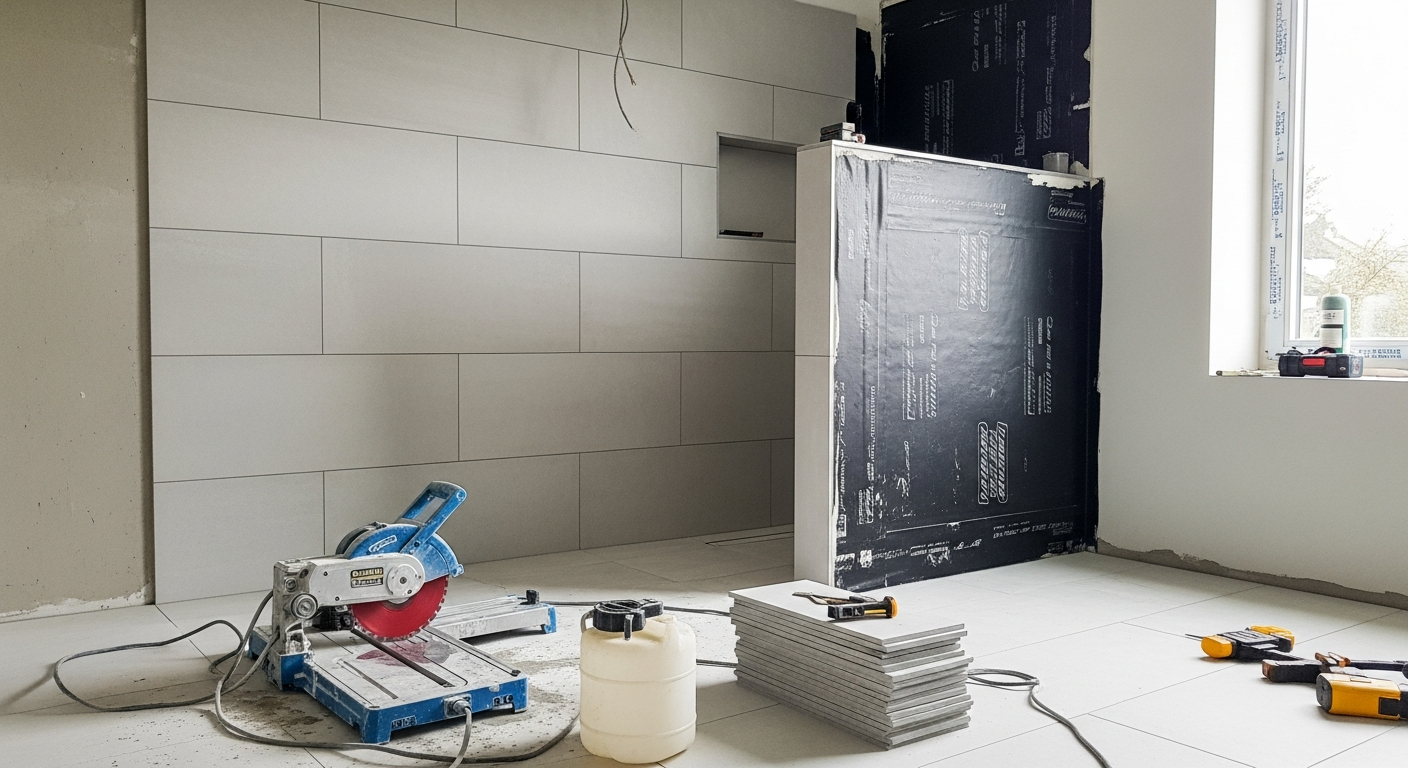
This is especially important for bathroom remodels, and it's one of the easiest things for a homeowner to overlook because you can't see it once the project is finished.
There's a difference between surface-level waterproofing and a properly installed shower system. A shower that looks great on installation day can fail behind the tile years later if the waterproofing wasn't done correctly. By the time you notice a problem — soft flooring, a musty smell, damage to the ceiling below — the repair is often far more expensive than doing it right the first time would have been.
Waterproofing is one of the easiest places to cut an estimate
When you're comparing estimates, ask directly how each contractor approaches waterproofing in a shower or tub surround. A contractor who can explain their process in detail is usually one who takes it seriously.
Want a transparent estimate you can actually compare?
We'll walk your home, explain every line item, and give you a detailed written estimate — no vague numbers.
What's Not Itemized
Don't Forget the "Invisible" Costs
Beyond materials and labor, there's a whole category of costs that don't show up as a single line item but absolutely affect your experience during the project and the final price.
A contractor who includes these in their process — even if they don't itemize every single one — is planning for a smoother experience. A very low estimate sometimes leaves these out entirely, which can mean more mess, more disruption, and more work falling on you to manage.
Before You Sign Anything
Questions Every Homeowner Should Ask
Before you sign anything, sit down with each estimate and ask these questions:
What exactly is included in this price?
What isn't included, and how would that be handled if it comes up?
Who is responsible for pulling permits?
What happens if hidden damage — like water damage or old wiring — is found once work begins?
Who is supervising the project day to day?
How are change orders handled, and how will I be notified before extra costs are added?
What warranty do you provide, and what does it cover?
Who purchases the materials, and can I be involved in selecting them?
What cleanup is included during and after the project?
What does your payment schedule look like?
A contractor who answers these questions clearly and in writing is giving you what you need to make a real comparison. A contractor who gets vague or defensive is telling you something too.
Warning Signs
Red Flags to Watch For
Not every low estimate is a problem, and not every detail that makes you pause is a dealbreaker. But there are a few warning signs worth taking seriously:
Pricing dramatically lower than every other estimate with no clear explanation for the gap.
Vague or one-line estimates that don't break down scope, materials, or allowances.
No written contract or scope of work — only a verbal agreement or a rough handshake deal.
No proof of insurance when you ask for it.
No references or past project examples the contractor is willing to share.
Pressure to sign immediately especially with discounts tied to signing 'today only.'
A note on payment schedules
Want a transparent estimate you can actually compare?
We'll walk your home, explain every line item, and give you a detailed written estimate — no vague numbers.
Permits & Code
A Note on Permits
Homeowners sometimes assume every remodeling project requires a permit — but that's not always the case. In most areas, permits are typically required for work that changes your home's layout, moves plumbing, or involves significant electrical changes. Cosmetic updates — like replacing fixtures, tile, paint, or cabinetry in the same footprint — often don't require a permit on their own.
That said, permit requirements vary by city and township, so it's worth asking each contractor how they handle permitting for your specific project and municipality. A contractor who pulls the proper permits when they're required is protecting you — since unpermitted work involving layout or plumbing changes can create problems later, especially when you go to sell your home.
Our Process
How We Approach Estimates at Redeemed Contracting
We'll be straightforward with you: our goal with this article isn't to convince you that we're the right contractor. It's to make sure you have enough information to make a good decision — whether that decision is us or someone else.
When we walk a home, we spend time understanding what you actually want the finished space to look like and function like — not just measuring square footage. That walkthrough is where we identify potential issues, like aging plumbing or signs of water damage, before they become surprises mid-project.
Our estimates are built around realistic material allowances, not builder-grade minimums, because we'd rather you know upfront what a space like the one you're picturing actually costs. And we lay out our process, our payment schedule, and what's included in writing, so you can compare it apples to apples against any other estimate you've received.
If you want to understand what a complete remodel typically costs in our area before you start collecting estimates, our Bathroom Investment Guide and Kitchen Investment Guide break down real cost ranges and what drives them.
The Bottom Line
Slow Down Before You Choose Based on Price Alone
The cheapest estimate can become the most expensive project if it's missing scope, using bare-minimum materials, or skipping steps like proper waterproofing. The most expensive estimate isn't automatically the best one either — if you don't understand what you're paying for.
Take the time to compare scope, materials, protection, communication, and warranty — not just the bottom-line number. Ask questions. Get everything in writing. A contractor who's confident in their work will welcome those questions instead of rushing you past them.
Ready to Compare?
Get a detailed, transparent estimate from Redeemed Contracting
If you're planning a bathroom or kitchen remodel in Northeast Ohio and want a detailed, transparent estimate you can confidently compare against anyone else's, we'd be glad to walk your home with you.
Schedule a ConsultationCommon Questions
Frequently Asked Questions
Why do remodeling estimates vary so much between contractors?
Estimates vary because contractors differ in overhead, experience, insurance, warranty coverage, business systems, and the quality of materials they include. Two companies can look at the same project and reach very different numbers based on how they run their business and what they include in the scope.
Does a higher remodeling estimate always mean better quality?
Not necessarily. A higher price can reflect better materials, more experience, or stronger warranty coverage — but it can also reflect higher overhead. The best approach is to ask what's included in each estimate rather than assuming price alone tells you about quality.
What is a material allowance in a remodeling estimate?
A material allowance is a dollar amount set aside in the estimate for a category like tile, a vanity, or lighting — before specific products are chosen. Allowances should be based on realistic, achievable options for the look you have in mind.
Why is waterproofing important in a bathroom remodel?
Waterproofing protects the structure behind your tile and flooring from moisture damage. It's often invisible once the project is finished, which makes it an easy place for corners to be cut. Poor waterproofing can lead to costly repairs years down the road.
What questions should I ask before choosing a remodeling contractor?
Ask what's included and excluded from the estimate, who handles permits, how hidden damage is addressed, who supervises the project, how change orders are handled, what warranty is provided, and what the payment schedule looks like.
Is a large upfront deposit a red flag when hiring a contractor?
Not on its own. Significant deposits are common in remodeling and typically cover material orders and scheduling. The real red flag is being asked to pay without a written contract, a clear scope of work, or a payment schedule tied to project milestones.
Do all remodeling projects require a permit?
Not always. Permits are typically required for work that changes a home's layout or involves significant plumbing or electrical changes. Cosmetic updates within the same footprint often don't require a permit, though requirements vary by city and township in Northeast Ohio.
What are red flags to watch for when comparing remodeling estimates?
Watch for pricing that's dramatically lower than other estimates with no explanation, vague one-line estimates, no written contract, no proof of insurance, no references, and pressure to sign immediately with a time-sensitive discount.
How should I compare bathroom or kitchen remodeling estimates?
Compare scope of work, material allowances, protection of your home during construction, cleanup, timeline, communication, warranty coverage, and permit handling — not just the total price.
What should I look for in a Northeast Ohio remodeling contractor?
Look for proper licensing and insurance, a detailed written estimate, clear communication about scope and allowances, a defined payment schedule tied to milestones, and a willingness to answer questions honestly rather than rushing you to sign.