
Redeemed Contracting · Bathroom Remodeling
What Is the Most Expensive Part of a Bathroom Remodel?
A straight-talking guide for Northeast Ohio homeowners who want real numbers, no surprises, and honest advice before they spend a dime.
If you've started researching bathroom remodeling costs, you've probably already noticed something frustrating: the numbers are all over the place. One website says $5,000. Another says $30,000. A contractor gives you a quote and you're not sure if it's fair or if you're being taken advantage of.
Here's the truth: both of those numbers can be right — depending on what you're doing, where your home is, and what you're starting with.
At Redeemed Contracting, we believe in answering the hard questions openly. No fluff, no bait-and-switch pricing, no hiding the ball. Just honest information so you can make a smart decision about your home.
Thinking about a bathroom remodel in Northeast Ohio?
We'll walk you through realistic costs, explain every line item, and give you a straight answer — no pressure.
The Foundation
Why Are Bathroom Remodels So Expensive?
Before we break down which parts cost the most, it helps to understand why bathrooms cost what they do.
Bathrooms are the most technically complex room in your home, pound for pound. In a small 50–80 square foot space, you have:
- ·Plumbing (supply lines, drain lines, venting)
- ·Electrical (GFCI outlets, exhaust fans, lighting circuits)
- ·Waterproofing systems (membrane, backer board, caulk, grout)
- ·Tile work (floor, walls, shower, niches)
- ·Cabinetry and countertops
- ·Fixtures (toilet, tub, shower, sink, faucets)
- ·Ventilation — and sometimes radiant heat
Every one of those systems has to be installed correctly, in the right order, by someone who knows what they're doing — or you end up with leaks, mold, failed tile, and expensive repairs down the road.
The Northeast Ohio factor
Cost Breakdown
The 7 Most Expensive Parts of a Bathroom Remodel
Here's where the money actually goes — ranked roughly by how often they represent the largest single cost category.
The Shower
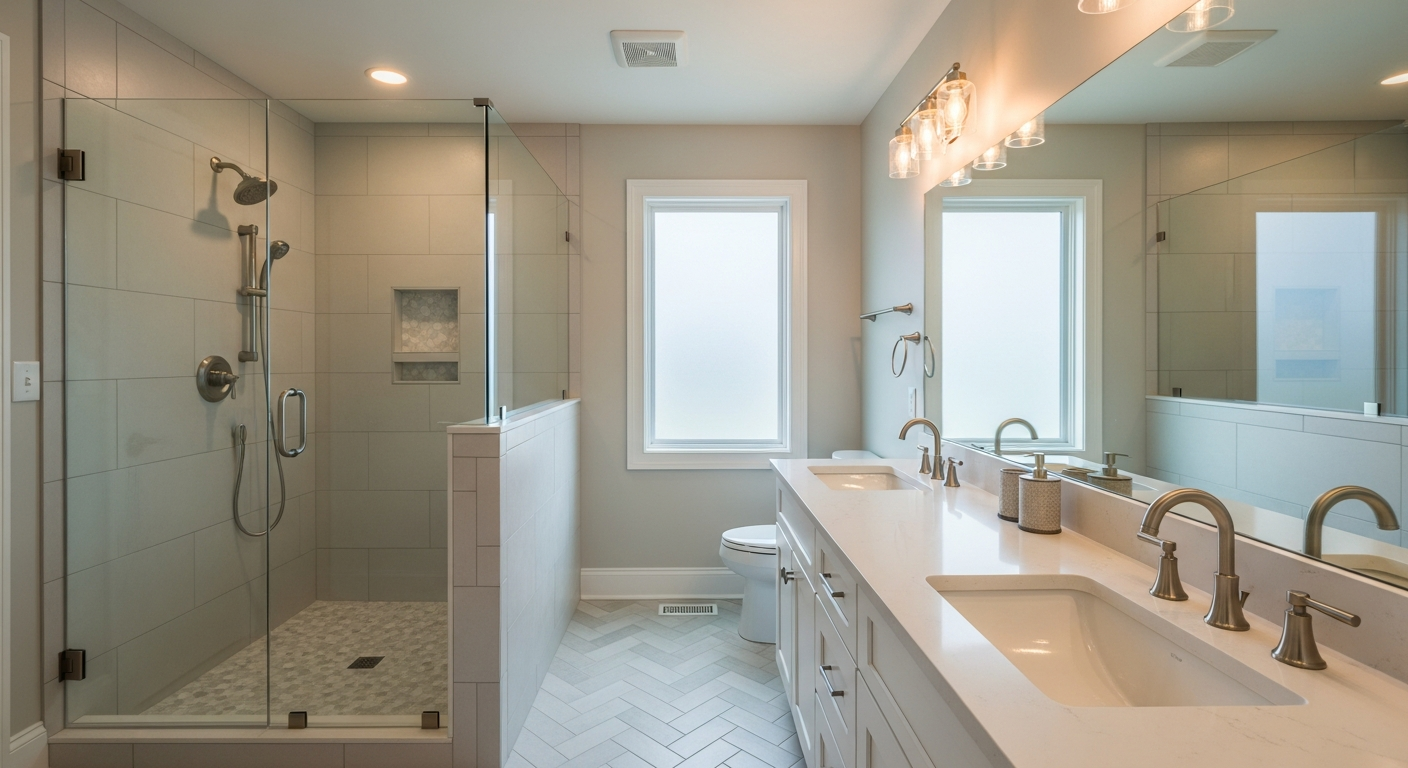
If you ask any experienced bathroom contractor what costs the most, the answer is almost always the same: the shower.
In a mid-range primary bathroom remodel, the shower can represent 35–50% of the total project cost.
Waterproofing systems
A properly waterproofed shower isn't just cement board with tile on it. It involves a layered system — often Schluter KERDI, Laticrete Hydro Ban, or a traditional hot-mud shower pan — that must be installed correctly before a single tile is set. Skipping or cheapening this step is where showers fail. Spend the money here.
Tile labor
Setting tile in a shower is one of the most labor-intensive and skilled jobs in all of bathroom remodeling. Every cut matters. Every grout joint matters. The complexity of your tile selection, pattern, and layout will significantly affect this line item — and it's priced accordingly. Done right, it lasts decades.
Glass enclosures
Framed shower doors
$600–$1,200 installed
Semi-frameless doors
$1,000–$2,000 installed
Frameless glass enclosures
$2,500–$5,500+ installed
Frameless glass is cut to fit your specific opening. The hardware — hinges, handles, clips — is part of the cost, and quality matters. Cheap hardware leads to leaks and failures.
Plumbing rough-in
Supply lines for hot and cold water, a drain, and potentially a body spray or handheld connection. If you're reconfiguring the shower's location or size, plumbing has to move — done by a licensed plumber.
Demo and prep
Before any of the above happens, the old shower has to come out — tile, backer board, membrane, sometimes the subfloor. Demo takes time. Disposal costs money. If there's water damage hiding behind the old tile (common in Hartville, Uniontown, and North Canton homes), that has to be remediated before moving forward.
Plumbing Relocation
If you're keeping all your fixtures in the same location, plumbing costs are manageable. But the moment you start moving things — even a few inches — the cost jumps significantly.
The rule of thumb
That said, sometimes moving plumbing is the right call — especially when converting a tub-only bathroom to a walk-in shower, or when you want a curbless shower with a different drain location. We'll tell you honestly whether it's worth it for your specific project.
Electrical Work
Bathrooms require GFCI-protected circuits, dedicated circuits for exhaust fans and lighting, and proper grounding. In older Northeast Ohio homes — particularly in Summit County and Stark County — the electrical panel and wiring often haven't been touched since the house was built, which means upgrades are sometimes required before an inspector will sign off.
Exhaust fan replacement or relocation
$250–$600
New lighting circuit or fixture installation
$350–$700+
Adding or relocating GFCI outlets
$175–$350 each
Heated floor system + thermostat
$800–$2,000
Panel upgrade (if required)
$2,000–$5,000+
Heated floors are an increasingly popular option in Northeast Ohio — for obvious reasons. It's a relatively modest add-on that buyers love and that makes a real difference on a January morning.
Vanities and Countertops
The vanity is one of those items where the price range is enormous — from a $300 box store special to an $8,000+ custom piece. What drives the cost:
- ·Stock vs. semi-custom vs. custom cabinetry. Stock vanities are the cheapest option. Semi-custom gives you more size and finish flexibility. Fully custom work built by a local shop fills awkward spaces perfectly but costs more.
- ·Countertop material. Quartz is the most popular choice right now — $75–$150 per square foot installed. Marble is beautiful but requires more maintenance. Cultured marble is affordable but shows wear. Solid surface (like Corian) is mid-range and very durable.
- ·Undermount vs. drop-in sinks. Undermount sinks look better but cost more to install and require a countertop material that can support the weight and take an edge profile.
What to budget for a primary bathroom vanity
Tile Labor
Tile labor is consistently one of the most expensive line items in a bathroom remodel — often more so than homeowners expect, and frequently more than other trades involved in the project.
Skilled tile work is a genuine craft. Setting tile in a shower requires precision at every step — waterproofing, layout, cutting, back-buttering, leveling, grouting. There's no room for error. A tile setter who does this work correctly in Northeast Ohio has earned their rate.
What makes tile labor more or less expensive:
- ·Tile size and format. Large-format tiles (24"×24", 24"×48") require a flatter, more carefully prepared surface and take longer to set correctly.
- ·Pattern complexity. A simple running bond is faster. Herringbone, basketweave, or diagonal layouts take significantly more time.
- ·Mosaic and accent tile. Penny round mosaic or decorative accents can take three to four times longer to set than standard field tile.
- ·Niches and custom features. Every niche, bench, and built-in adds time and complexity.
- ·Subfloor or wall prep. If the substrate isn't flat and solid, the tile setter has to address it before a single tile goes down.
Don't try to save money by hiring the lowest bidder on tile. Tile that fails — whether from poor adhesion, bad waterproofing, or sloppy installation — is expensive to tear out and redo.
Hidden Issues Behind Walls
This is the category nobody wants to talk about, but any honest bathroom contractor in Northeast Ohio will tell you: it's real, it's common, and it adds cost.
When we open up walls and floors in older homes, we regularly find:
Rotted subfloor or floor joists
From years of water intrusion around the toilet, tub, or shower.
$500–$2,500+
Mold or mildew behind tile
More significant mold requires a licensed remediation company.
$300–$700+ (light cases)
Galvanized steel pipes
Common in Akron-area homes from the 1950s. Corroded internally, restricting flow.
$800–$3,000+
Knob-and-tube or aluminum wiring
Must be addressed before electrical work can proceed.
Varies
Inadequate venting
Causing moisture problems that have often been accumulating for years.
$400–$1,200+
What a good contractor does
Permits and Inspections
In most communities in Northeast Ohio — Summit County, Cuyahoga County, Portage County, Medina County, Stark County, and others — a bathroom remodel that involves moving plumbing, electrical, or structural work requires permits.
Permits typically run $200–$700 depending on scope and municipality. They also require inspections, which add time to the project.
Why we always pull permits
Thinking about a bathroom remodel in Northeast Ohio?
We'll walk you through realistic costs, explain every line item, and give you a straight answer — no pressure.
Real Numbers
Realistic Price Ranges for Bathroom Remodels in Northeast Ohio
These are realistic ranges based on what bathroom remodels actually cost in the Akron/Canton area — not national averages that don't reflect our local labor market.
Hall Bathroom
40–60 sq ft · single sink · tub/shower combo
Budget remodel
Cosmetic updates, stock fixtures, basic tile.
$12,000–$18,000
Mid-range remodel
Better tile selections, semi-custom vanity, updated fixtures.
$18,000–$28,000
Higher-end remodel
Custom tile work, walk-in shower conversion, quality finishes throughout.
$28,000–$45,000
Standard Primary Bathroom
60–100 sq ft · double sink · separate shower
Budget remodel
Functional update, standard fixtures, stock vanity.
$22,000–$35,000
Mid-range remodel
Custom tile shower, semi-custom double vanity, quality fixtures.
$35,000–$55,000
Higher-end remodel
Custom tile work, freestanding tub, heated floors, frameless glass.
$55,000–$85,000+
Primary bathrooms have more square footage, more fixtures, and usually a larger shower — the biggest single cost driver. The jump to the higher range often involves custom tile work, a freestanding tub, heated floors, or significant layout changes.
Luxury Bathroom
100+ sq ft · custom everything
Starting range
$75,000–$125,000+
Luxury bathrooms involve premium tile (porcelain slabs, handmade tile, natural stone), custom cabinetry, high-end plumbing fixtures (Kohler, Brizo, Signature Hardware), custom glass, heated floors, steam showers, and extensive custom tile work. These are significant undertakings and are priced accordingly.
For a more detailed breakdown by project tier, see our Bathroom Remodel Investment Guide.
Size Matters
How Bathroom Size Affects Pricing
Bigger isn't always dramatically more expensive — but it does add up. More square footage means more tile, more time to set it, more material waste, more prep work.
That said, small bathrooms can actually be more expensive per square foot than large ones. The labor costs — demo, waterproofing, plumbing, electrical — are relatively fixed regardless of size. You can't waterproof a 40 sq ft bathroom in half the time of a 60 sq ft bathroom.
A Common Surprise
How Tile Selection Changes Cost Dramatically
Two tile projects can look similar in design but have wildly different costs depending on:
- ·Tile material. Porcelain is durable and mid-range in price. Natural stone (marble, travertine, slate) is more expensive to purchase and harder to install — requiring sealing, careful cutting, and more specialized labor.
- ·Tile size. Large-format tiles (24"×48", 24"×24") require a flatter, more carefully prepared surface and produce more waste due to cuts.
- ·Pattern complexity. A simple running bond is faster to set. Herringbone, basketweave, or custom medallions take significantly more time.
- ·Rectified vs. non-rectified tile. Rectified tile has precise, consistent edges and can be set with very tight grout joints (1/16"). It creates a cleaner, more modern look but requires more skill to install correctly.
The bottom line on tile
Layout Decisions
How Layout Changes Increase Labor and Cost
If you're keeping your toilet, vanity, and shower/tub in the same locations, you're doing a cosmetic remodel — the most cost-effective approach. If you're moving things, even slightly, you're doing a renovation, and costs increase meaningfully.
Tub to walk-in shower conversion
New drain location, shower pan, waterproofing, plumbing trim.
+$2,500–$6,000+
Moving the toilet
Cutting and relocating the drain line.
+$1,500–$3,500+
Expanding into a closet or adjacent space
Structural work, new framing, extending plumbing and electrical.
+$4,000–$12,000+
Removing a load-bearing wall
Requires a beam, structural engineering, and significant framing cost.
+$5,000–$15,000+
Layout changes aren't always avoidable — sometimes the old layout just doesn't work. Understanding the cost implications helps you prioritize what matters most.
Northeast Ohio Homes
Older Homes in Northeast Ohio: Expect Surprises
We work in a lot of Summit County, Medina County, and Stark County homes — many built before 1970 in communities like Green, Jackson Township, North Canton, Hartville, and Uniontown. These homes have character. They also have surprises.
Here's what we commonly find:
- ·Galvanized supply lines that are corroded internally and restricting water pressure.
- ·Lead-based paint on walls or trim that requires proper handling and disposal.
- ·Asbestos floor tiles under vinyl or old ceramic tile — needs to be properly identified before proceeding.
- ·Knob-and-tube wiring that can't legally support modern bathroom electrical loads without being updated.
- ·Inadequate subfloor thickness that won't support certain tile installations without sistering joists or adding underlayment.
- ·Water damage from a slow-leaking toilet wax ring or a shower that was never properly waterproofed.
None of these disqualify you from doing a beautiful remodel — but they need to be addressed. An honest contractor will tell you what they found, show it to you, and explain your options before proceeding.
Smart Decisions
Ways to Save Money on a Bathroom Remodel
There's no magic trick to making bathroom remodels cheaper. But there are smart decisions that can significantly reduce cost without sacrificing quality.
Keep plumbing in place. The single biggest lever you can pull. If you don't move drains and supply lines, you save substantial labor cost.
Choose your tile wisely. You don't need expensive tile everywhere. Use a simpler, more affordable tile for floor and shower walls, with a more impactful accent tile or feature wall as the focal point.
Invest in the shower; go simpler elsewhere. The shower is where quality pays off most. Offset that cost with a stock vanity, standard fixtures, and simple floor tile.
Get multiple quotes — but compare apples to apples. A low quote might be leaving out waterproofing, permits, or proper subfloor prep. Ask every contractor for a detailed written scope of work so you can compare accurately.
Don't DIY the things that matter most. Tile demo, painting, and fixture swaps are reasonable DIY projects. Waterproofing, plumbing, and electrical should be done by professionals. A failed shower waterproofing job will cost far more to fix than you saved.
Where to Invest
What Is Worth Spending More On?
Not everything in a bathroom remodel is worth upgrading. Here's where the money is well spent:
Resale Value
What Adds the Most Value to a Bathroom Remodel?
If return on investment matters — whether you're planning to sell or just want the spend to be defensible — here's where resale value lives:
ROI by the numbers
FAQ
Frequently Asked Questions
What is the most expensive part of a bathroom remodel?
Why are bathroom remodels so expensive?
Is tile or plumbing more expensive in a bathroom remodel?
Does moving plumbing increase the cost significantly?
Are curbless showers more expensive?
What's the cheapest way to update a bathroom?
Serving Akron · Canton · Green · Jackson Township · North Canton · Hartville · Uniontown
Ready to Talk About Your Bathroom Remodel?
At Redeemed Contracting, we believe in transparent pricing, honest scopes of work, and quality craftsmanship that lasts. We'll come to your home, look at what you're working with, talk through your goals, and give you a straightforward, detailed estimate. No pressure. No games. Just honest answers.